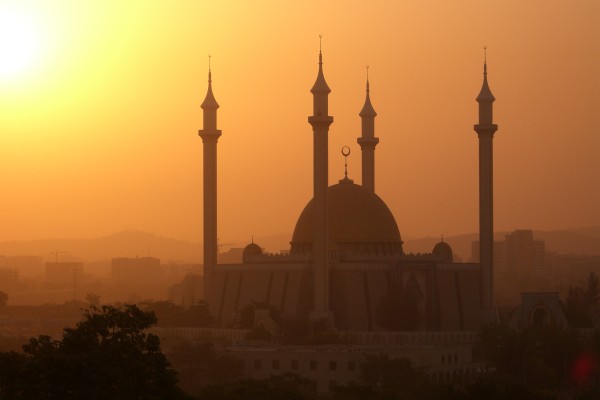


100,000 Muslims have come to faith in Christ over the past 12 years:

May 11th, 2012 / 0 Comments

Our major project is training and supporting Ethiopian missionaries sent out through our partner, Rift Valley Vision Project, that are evangelizing and planting churches among Muslim, Orthodox and tribal peoples of Ethiopia and now into Somalia, Northern Kenya, Eretria, Sudan and the Middle East. Over the past 12 years 100,000 Muslims have been brought to faith in Christ and are presently part of a discipleship program or house church across Ethiopia. Fire Over Africa supports the training of these missionaries, which is done through Shiloh Bible College Ethiopia in Hawassa. Missionaries are selected by Rift Valley Vision Project in cooperation with their home churches and gathered from all parts of Ethiopia for training at SBCE in Hawassa. Training is a one-year program that combines both course work and practical work with experienced missionaries.

Missions literature is filled with affirmation that training and sending national workers is the best approach and yet the majority of such programs involve both training and oversight being done by expatriate (foreign) missionaries and not national workers. In this case the selection of Ethiopian missionaries is done in a cooperative effort between their home church and the RVVP which is an effort entirely overseen by Ethiopian leadership. Missionaries are sent by RVVP and overseen by that organization. Their training is conducted by SBCE with 90% of all teaching provided by qualified Ethiopian teachers in their own language.

The success of this approach is phenomenal with more than 100,000 Muslims coming to faith in Christ over the past 12 years. The full report of the past 3 months (1st quarter of 2012) can be downloaded and reviewed Click Here

Fire Over Africa both supports the training of these missionaries and also the sending process as funds are available. To support this important work please visit our website to make a donation.

Conversions to Christ

February 23rd, 2012 / 1 Comment

These last few weeks I have been finalizing my research for a second doctoral degree in the area of Missiology and specifically looking at the topic of Muslim Conversion to Christ. I have interviewed quite a number now and I want to share with you some of what I have learned.

Many Muslims have questions about their faith that arise from what seem to be inconsistencies. They have heard teachings that do not seem to fit together well and so questions come into their mind about Jesus (Issa) or about how to get to paradise and avoid Hell. In many cases they cannot share those questions as it is not an acceptable part of their culture to raise such issues or discuss any doubts although some are bold enough to ask the imam or Quran teacher. In many cases these questions lay dormant until something causes them to rise into a flame.

One thing that can happen is the witness of a Christian. Muhammad was the oldest son of his family with a long line of sheik’s and imams. He was expected to continue the family tradition of becoming a Muslim cleric and so he was to go to study in Saudi Arabia. In his area 99% of all people were Muslim but in his school there was a Christian girl. She would witness and preach openly any chance she got. But Muhammad complained about her to the school officials for her preaching and got her thrown out of the school for a season. Evidently she began to pray for him because it was not long Muhammad had a dream in which Christ appeared to him and stirred many of the questions that had been in his heart for some time. Not long after he became sick with a very serious and contagious illness. No one visited him except his mother since he was in bed always and others did not want to become sick themselves. When he had been sick a long time, one day when his mother was out of the house he decided to go outside since he had not been for a long time. In the process he met some of this classmates including this Christian girl. She and the other Christian at his school told Muhammad they were not afraid of the sickness and would come to visit him but they had heard he died. The fact that they were truly not afraid of this illness moved him a little more toward being willing to accept Christ and Lord and Savior. When he had become well he returned to school where the other Christian, a young man, invited all the Muslim students to come to a certain place near the market and he was going to preach Christ. Muhammad went because this was a young man who had been his best friend when he was young but had converted to Christ and he wondered why? That day Muhammad received Christ as his friend shared how he had come to know the truth about Issa. He is now a preacher himself and has led many to know the Lord in truth.

Muhammad’s story is common in that it involves questions that he had thought about for a long time but never verbalized. It involved a dream appearance of Jesus and the supernatural work of the Spirit that gave his friends confidence to visit him even though he had a deadly illness. It was a process of God working driving small wedges in Muhammad’s mind that eventually moved him to receive Christ. It involved bold testimony of people who suffered persecution for their witness but retained love and compassion for others even though they suffered for their witness. All of these factors are common among Muslims coming to Christ here in Ethiopia.

Pray for the lost and seek God on behalf of those who cannot seek God for themselves.

Muslim Outreach

August 24th, 2011 / 0 Comments

Recently, I had the opportunity to meet with three key leaders involved with Muslim outreach in Ethiopia to discuss their strategies and challenges. Overall Muslims are coming to Christ but there are significant challenges in this ministry. Of course evangelism is difficult as many of the areas to be reached are currently nearly 100% Muslims communities and so any overt Christian witness is met with severe persecution. For that reason there are different strategies for reaching such communities with the gospel. One group is very highly contextualized to the point that the bible is virtually not mentioned for at least 2 years. During that time only the Quran is used. This group does us a house church strategy that is very successful in keeping converted Muslims in their community as an ongoing witness. A second group is openly planting churches, praying for the sick, depending on God to do miracles and suffering persecution in the process.

However, they have been quite successful with a number of mosques coming to Christ as a whole including the Mosque leaders who have now made the mosque into a church. Although attacks come, their witness is respected and although this movement has not been operating as long nor is it as large as the other two the Christians are strong and successfully living as a Christian witness in their communities even though persecuted. The last group has a carefully planned strategy. They begin with outreach methods such as distributing small notes in the mosque in Arabic raising questions about Issa and having study groups for Muslims interested to find out more about what the Quran says about Issa (Jesus). They teach first what the Quran teaches about Issa (emphasizing the positive) and what it teaches about the value of studying the bible. The Quran itself is much more positive about these things than the Haddith (traditions) which most of the Muslims in Ethiopia base their faith upon. The Quran instructs Muslims to read and honor the Bible whereas the Haddith speaks much about its being corrupted. So once the people understand that the Quran, which is the 1st authority, teaches them to study the Bible and to honor it, that is when they go on to study it together with these “seekers.” Over a carefully planned process they discuss the message of the bible focusing on Jesus and what the Bible says about Him. Over a period of time the people see for themselves the truth and make Christ Lord of their life. This group does intentionally reaches a point of understanding where it is clearly understood that Mohammad is not a prophet, the Quran is a later revelation and Jesus’ revelation in the gospels is greater authority and that he is the Son of God.

The process from beginning seeker to receiving Jesus as Lord may be 6 months to 2 years depending on the situation and the ability and anointing of the teacher. This period is a process of conversion for them in which the understanding is gradually brought into agreement with the scriptures. We are not very supportive of the first approach and do not teach that in our training program. We are happy with the house church concept but the level of contextualization is so high that it seems that the people may never really understand Christian truth. The second and third approach for us are options depending on the nature and character of the one sharing Christ. The outreach that depends much on the Holy Spirit for miracles is appropriate especially for those who do not come from a Muslim background. But it can be dangerous and not everyone is willing to be so confrontational in their approach. In the case of this group I interviewed it has been successful, confrontation has been controllable and the fruit is good. I do not know if every group could have such a testimony of success with this method but they have great faith in Christ to show Himself strong on their behalf. The last group has a very successful method that respects the traditions and culture of their target group and reaches a full understanding of true Christian teaching and doctrine over a process that has been extremely well designed. I think it is the best approach for those who come from a Muslim background and have been trained in how to use this approach. There is not a one-size fits all approach for Muslim evangelism and church planting. Although there has been a great emphasis on contextualization strategies in the past few years, an important factor is the person pursuing the outreach themselves.

Many of the high contextualization methods require a person to be a former Muslim themselves and often from the same cultural group. Cross-cultural missionaries and those who did not convert from Islam themselves cannot really use these methods effectively. Which leads us to the belief that it will be mainly former Muslims who will be the ones to reach Muslims for Christ. We believe that there is a great ground swell world-wide in Muslim outreach and we will see a tremendous harvest in the next few years among Muslim people groups. Many areas are already beginning to see a level of success only dreamed of 20 years ago but there is still much work to be done. Please pray for this outreach as it is a critical time in God’s economy to reach Muslims with the gospel.

Bethel Children’s Home

July 21st, 2011 / 0 Comments

Click Here: Bethel Children’s Home to check out the profiles of kids.

Renewed Into His Image

June 28th, 2011 / 0 Comments

Colossians 3:5-11 – Therefore consider the members of your earthly body as dead to immorality, impurity, passion, evil desire, and greed, which amounts to idolatry. For it is on account of these things that the wrath of God will come, and in them you also once walked, when you were living in them. But now you also, put them all aside: anger, wrath, malice, slander, and abusive speech from your mouth. Do not lie to one another, since you laid side the old self with its evil practices, and have put on the new self who is being renewed to a true knowledge according to the image of the One who created him — a renewal in which there is no distinction between Greek and Jew, circumcised and uncircumcised, barbarian, Scythian, slave and freeman, but Christ is all and in all.

Consider yourselves dead to sin but alive to God (Rom. 6:11). It sounds so easy and it takes such few words to write. Yet this is our struggle in life. In Africa we have idolatry all around. Each year more than 1 million people gather (some say 2 million) in Debre Zeit, Ethiopia (Bishoftu) to celebrate a festival of Irachea. This is a time when new life is celebrated at Lake Hora and around a certain tree at the side of the lake. Such festivals and practices are a part of the ongoing celebration of culture but they are also idolatry. But then in America we have no shortage of greed and that too is idolatry. I doubt if there is more idolatry in Africa than America on this count.

And it is on account of these things (immorality, impurity, passion, evil desire, greed) that the wrath of God will come. Rev. 21:8 reads: But for the cowardly, and unbelieving and abominable, and murderers and immoral persons and sorcerers and idolaters and all liars, their part will be in the lake that burns with fire and brimstone, which is the second death. It makes me think again about how careful I am to tell the truth.

These things may have defined your past life but they must not define the present life of a Christian. “But now…” things are different. As Christians we no longer live a life allowing such things but rather we put aside anger, wrath, malice, slander and abusive speech. Again Paul says, “do not lie” since that is part of the old person who you no longer are. There is a clear difference made here between those things that characterized our former life and the new life according to the character of Christ. For those who have died to sin, there is a rebuilding project proceeding in their life. The old habits and practices are being replaced with new ways of living, thinking, acting and feeling.

The pattern, or blueprint, for this rebuilding project is given as the “image of the One who created us.” Gen. 1:26 says, “Let us make man (or humans) in Our image and after Our likeness.” The building project still continues. Adam was not yet in the image of God which we know because He sinned. There is no sin in God, has never been any sin in God nor will there ever be any sin in God. So Adam was not in God’s image yet. No, if we want to see a human in the image of God we must look to Jesus, the last Adam. He is man in the image of God, as we read in Colossians 1:15 of this series of studies. But when we consider ourselves dead to sin as Paul describes in V. 5 and 8, then the next step is to put on the new self that is being renewed according to the pattern of Christ. Paul uses the idea of “being renewed,” because the work is not being done by us, but by God. You cannot renew yourself, neither can you remake yourself, but God can do both (see Jeremiah 18). If we want to know what the finished product is intended to look like, we must look to Jesus.

As we turn to the last verse in this section it comes to mind that in the church today we find some who are in love with everything Jewish. They love Jewish music, use a Jewish head covering when the pray, blow the rams horn, use Jewish names for God in preference to “Jesus.” May God bless them in their love for the Jews. But there is no special culture more precious to God than other cultures just as there is no special language more precious to God than others. I know Spanish is really the language of heaven but I think other languages are there as well. Some say Chinese is the language of God because more people speak that language than any other. But on the day of Pentecost all heard the glory of God “in their own language,” because Christ and His gospel are fully translatable. If you look at pictures of Christ in European museums He looks European. In China he looks Chinese. In Africa He is black, and in Latin American He appears Latin. Why? He belongs to all of us but is owned by none. We might use the name of Yahweh, or Yah, or Jehovah, or Elohim, or any other biblical name, but I say, Christ is all and in all and His name is above all names in heaven or in earth and there is no other name by which we must be saved.

  • Receive Updates by Email

    Enter your email address:

    Delivered by FeedBurner

  • Categories

  • Archives